When you log onto TikTok, you probably assume your digital footprint is shielded by the app’s privacy toggles, regional settings, and profile settings. However, third-party web tools like the User Info module on TikTrack reveal just how easily metadata can be extracted from social media platforms without your consent.
I am writing this breakdown to explain what the User Info module actually does, what data it pulls, how it breaches platform privacy, and why setting your account to private offers zero protection against it.
What is the TikTrack User Info Module?
At its core, the User Info module is a web-based OSINT (Open-Source Intelligence) lookup utility. By simply entering a target TikTok @username into a text box, the frontend triggers direct backend API queries to TikTok’s internal servers, bypassing the native app interface entirely.
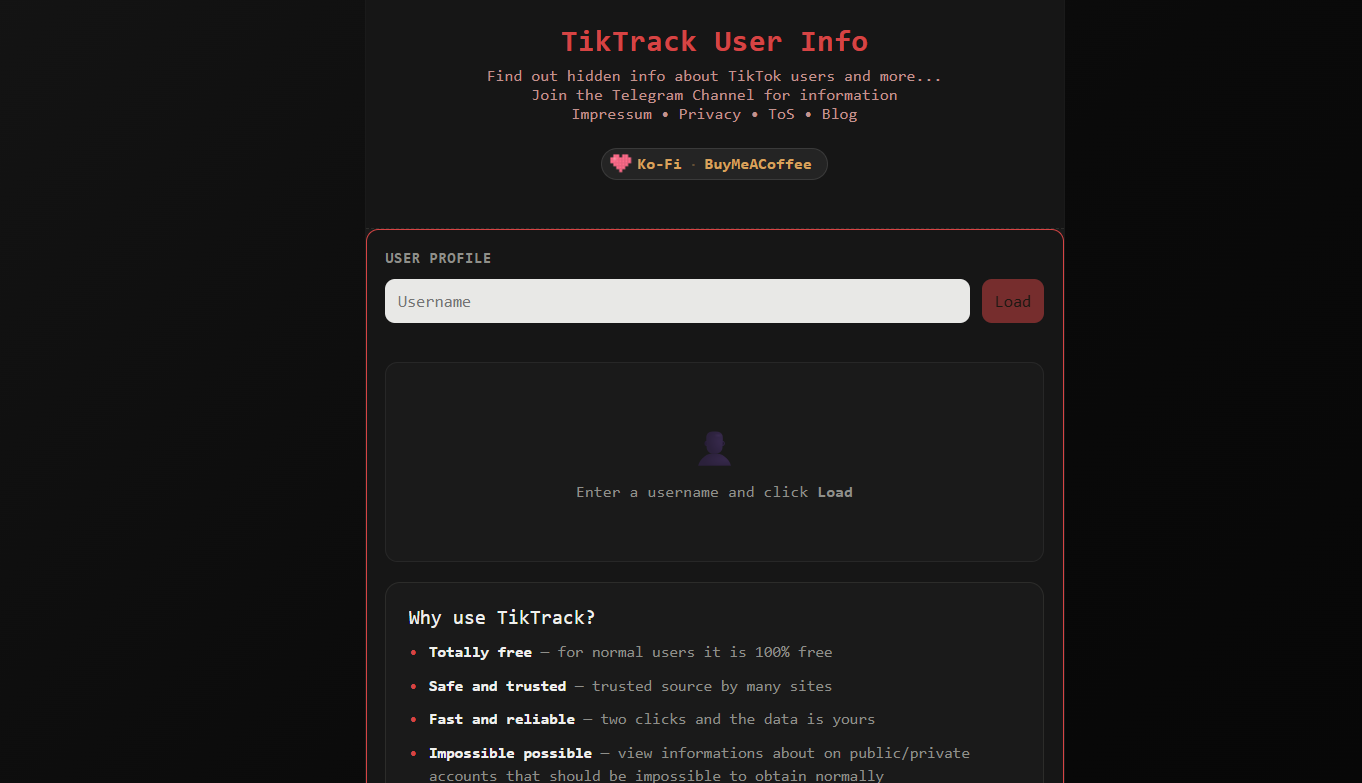
The module serves as a central hub designed to extract user metadata, track history, monitor logs, and resolve direct media files without requiring you to log in or hold an active TikTok account.
What Information is Fetchable from the Frontend?
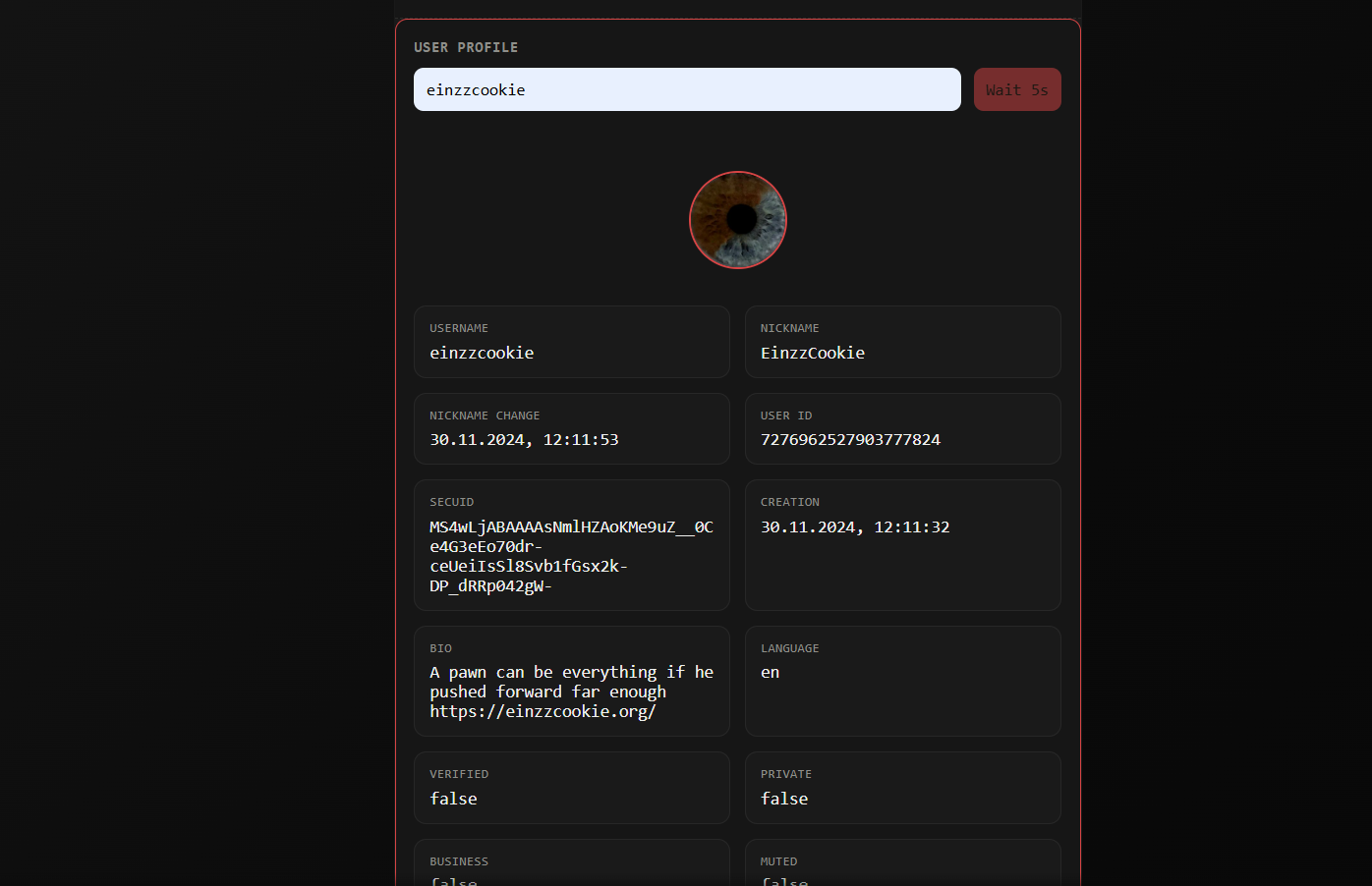
When you query a profile using the site's interface, the user-facing dashboard renders a clean, organized view of metadata. Much of this information goes beyond what a casual viewer sees on the official app.
Fetchable via Frontend Interface:
- Account Identifiers: Unique numeric User IDs (UIDs), SecUIDs, exact avatar image URLs in original HD resolution, and custom bio details.
- Engagement & Profile Stats: Exact follower counts, following counts, total video counts, and aggregate heart/like metrics.
- Account Metadata: Profile creation timestamps, nickname information, friends and more.
- Archive: Old historically archived data about any account that was ever entered.
What Data is NOT Fetchable?
Despite what clickbait tracking tools claim, the frontend interface cannot access deep backend infrastructure or private credentials.
Not Fetchable:
- Account Credentials: Plaintext or hashed account passwords, connected email addresses, and phone numbers.
- Direct Messages (DMs): Private chat logs between users.
- Payment Data: Credit card details or TikTok Coin wallet histories.
- Live GPS Tracking: Exact physical addresses or live real-time GPS locations.
In short, privacy toggles inside the TikTok app only restrict the official graphical user interface—they do not lock down the server responses that OSINT scraping tools exploit every day. This means that the second you create an account on TikTok you can and will be tracked and the privacy settings do not matter.